How to warm up for lifting weights
How (and why) to warm up for resistance training
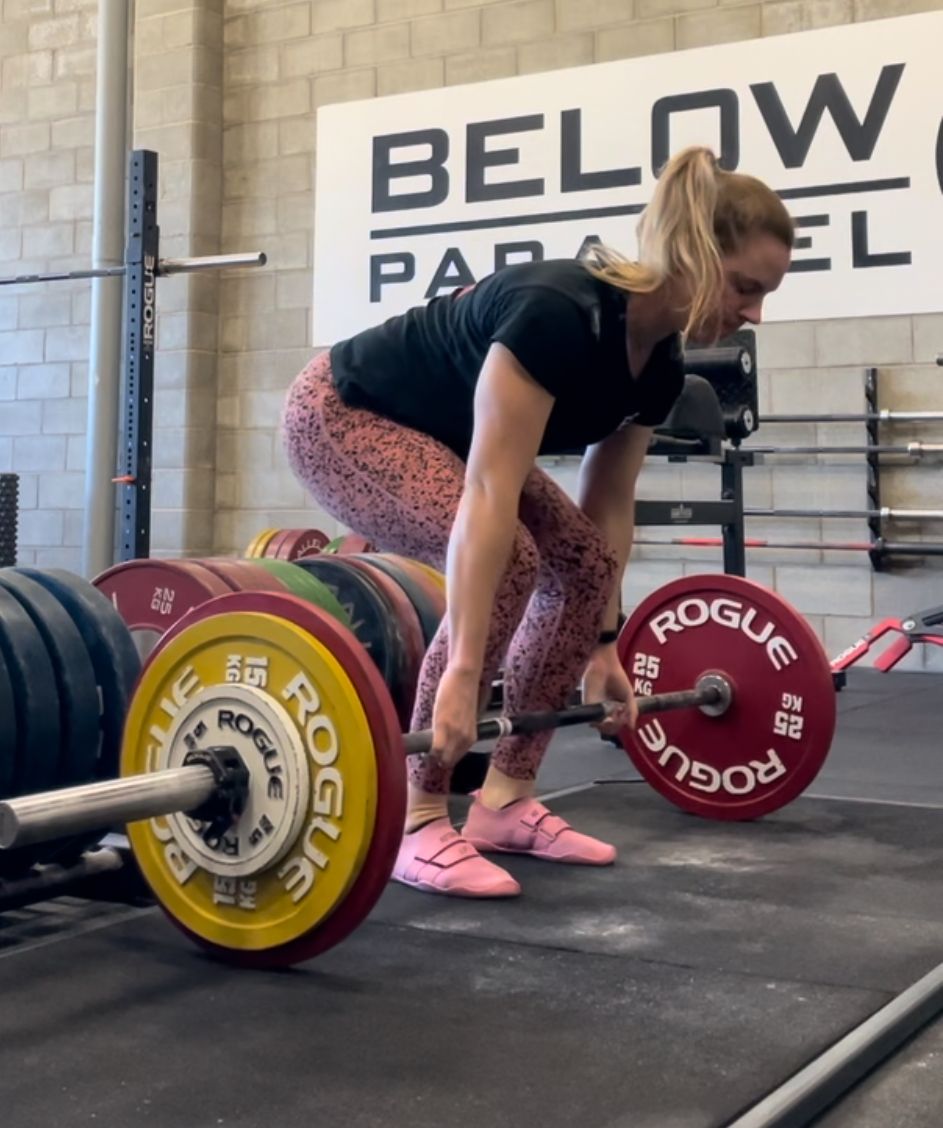
Warming up for weight lifting should be specific to the task at hand.
In general, it is enough to warm up by doing the intended exercise at a lower intensity before progressively adding weight. In an exercise session, usually, you will do large, multi-joint, compound exercises first, when you are fresh. For example, a squat or a deadlift. How light you need to go in your warm up will depend on how heavy you are going in your workout, as well as your experience level, preference, and personal requirements.
The goal is effectively warm up to doing an exercise without getting so fatigued warming up that you impact your performance at it. When you do a big compound lift, you need to recruit lots of muscle fibres. Warming up helps your body to fire up these pathways and get your muscles primed and ready. Even the most experienced lifter cannot turn up cold to lift their heaviest ever weight without warming up first. However, you don't want to warm up so much that you actually start building fatigue that then prevents you performing at your best. So, it is a bit of a balancing act that takes practice.
In our programs, we refer to ‘warm up weight’ and ‘working weight’. We usually only list warm up weights for the primary compound lifts (barbell squats, deadlifts, and bench press). Lower reps will require more warm up sets, as it means you are lifting to a higher intensity. Again, experience level will dictate how much warm up you need to do.
For example, if you are currently lifting 40kg deadlift for 5 reps, but are still learning, while this may be the heaviest you have lifted so far, it may not actually all that hard for you. In this case, you might do just one warm up set at 30kg (deadlifts usually need to be about 20kg at a minimum using the lightest possible bar and bumper plate combo (15kg + 2x2.5kgs), so we often don’t start people on the bar until they can lift at least this much), then go into your working sets at 40kg.
For someone who is going for a very heavy 1 or 2 reps, lets say at 60kg, and this weight is very hard and near maximal for them, they might need to do warm ups at 40k, 50kg, and 55kg. To avoid getting too tired doing these warm ups, it can be useful to do decreasing reps as the weight gets heavier. For example, 5 reps at 40kg, 3 reps at 50kg, 1 rep at 55kg - the point of this last rep to give them a ‘feel’ of the heavier weight so they are not shocked by how heavy the top weight feels. Again this comes down to experience and how confident you are lifting different weights. As time goes on, generally the warm up weight can become heavier, the jumps to heavier weights larger, and the number of reps less.
In general, you don’t need to rest between warm up sets, unless you have done quite a few, or gone close to working weight, and can feel you are fatigued - especially if you are lifting the weights to change them, that in itself can be tiring! Remember that the main goal is to lift as much as you can, and perform at your best in your working sets, particularly in your first working exercise.
For accessory exercises, you might use your first set of an accessory exercise as a kind of warm up, going slightly lighter and then working towards your working weight in the 2nd set. For e.g. if you are able to do 10 reps of chest press at 6kg and just managed to get to 7kg last week, it can be good to do 6kgs for your first set then progress to the 7kgs for the second.
If you are starting at a moderate intensity, I.e. doing 10-12 reps, you may not need much of a warm up, as the exercise itself at that intensity may count as a warm up. You might find you need to work up to your working weight still, for example if you are doing the leg press, 100kgs, for 12 reps, you might do 6 reps at 50kgs before increasing to 100kgs and doing 12. If the exercise is later in the workout, you might find you don’t need to warm up at all and can go straight to your working weight (if your legs are already warmed up).
Again - it depends a bit, and comes down to personal preference and experience. You will figure out what works over time. You might find you work better doing some cardio first as a bit of a warm up, but again avoid getting too fatigued before starting - keep it short and light (5-10 minutes).