How to structure a strength training session
How to design a strength training session that makes sense
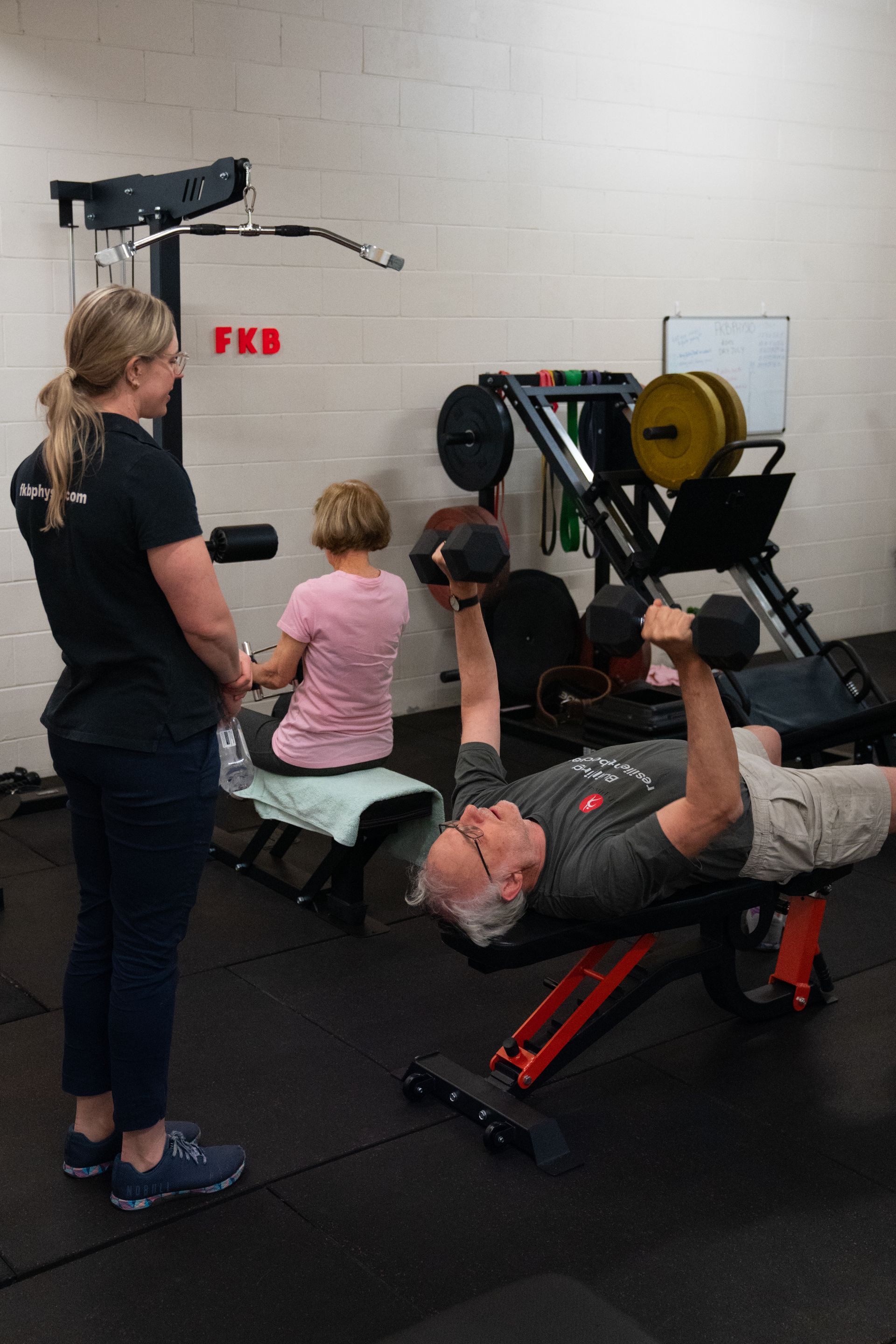
Compound vs isolated exercises
A strength workout will be made up of a variety of different exercises.
Compound exercises are those that involve lots of muscle groups at once. They are big, tiring movements, and are done early on in the workout when you are fresh to make sure you can do them well. These are things such as deadlifts, squats and bench presses. Exercises such as rows and leg press are also compound exercises but they are slightly less effortful, in that some body parts are more fixed. I.e. doing a barbell deadlift, you are pushing with your legs, loading your hips and lower back, controlling through your upper body, and lifting very heavy weights. Doing a leg press, you are using your large hip and knee muscles, but your upper body and back are fixed and supported by the machine. A knee extension or bicep curl is isolated, in that it is only using one joint at once - the knee extension simply loads one side of the knee joint muscles (quads), a bicep curl loads one side of the elbow joint muscles (biceps).
Compound barbell exercises, squats, deadlifts, and bench press, are often referred to as primary lifts or main lifts on a given day. The other exercises are known as accessories.
How a session is structured
Generally, it makes sense to start off with larger compound exercises when you are fresh, as they require the most energy and technique. Often doing these exercises by themselves, so you can recover effectively in between sets, is a good idea.
You could then move onto compound exercises that are less intense (eg leg press) that still require lots of power and energy but a little less than the unsupported movements. It can be efficient to combine these exercises into groups to maximise time efficiency, e.g. an upper body exercise with a lower body exercise, so one body part works while the other body part rests. This enables shorter overall rest beaks (discussed in more detail later).
Finally you can add isolated exercises which do not require as much technical focus and are not as fatiguing towards the end of the workout. It is ok to do these exercises when the muscles have already been used in the workout elsewhere. In our classes this is often when we add core and impact exercises, again which can be done with a degree of fatigue without it compromising performance.
Why are rest breaks important?
Rest breaks in weight lifting are there to help you to continue to lift heavy enough. You may not feel out of breath after lifting weights, particularly if you are fit, but your muscles should feel temporarily fatigued. If you are lifting heavy enough, i.e. to 2 reps in reserve, you wouldnt be able to do another set of the prescribed reps immediately after finishing the first set. The higher the intensity of the lifts, the longer the rest break is likely to need to be to be able to repeat the effort. For high intensity lifts, e.g. your compound lifts done at low reps, you need the longest break. For people doing 1RM lifts, for example, they may take 5 minutes rest before trying again.
In our FKB programs, as we do not lift to this intensity, the maximum rest required is probably closer to 2-3 minutes. We often program a lighter accessory exercise with our compound lifts at the start of the workout that wont compromise the performance on the compound lift. This is because most people find total rest boring (!) and it also means you get more total exercise in a given timeframe. As we are not going for max, max efforts, we find this doesn’t compromise performance on the main lift.
What to include in each workout
If you are training 1-3 times per week, it probably makes the most sense to do a full body workout each time. This is to make sure you are training the most important movements (e.g. squats, hinges, presses) multiple times per week. If you are training any more frequently, you might like to try splitting your workout up differently, e.g. into upper and lower body days.
There is a matter of personal preference here and probably the most important consideration is how well you recover. You might find doing an entire upper body session is very tiring within the session and your performance drops as the session goes on. Or, you might find if you try and do a full body session 4 days per week, you cant recover from it well and performance drops across the week. A degree of trial and error is necessary to figure out what works.
A full body workout should include a squat, hinge, split squat, upper body vertical push and pull, upper body horizontal push and pull, and something for core and calves. These movements should each be trained more than once per week, ideally.